



If you’ve ever read financial news about the Reserve Bank of India adjusting repo rates or heard analysts discussing bond yield changes, you’ve likely encountered the term “basis points.” While it might sound technical, understanding basis points is simpler than you think—and it’s essential knowledge for anyone interested in investments, loans, or financial markets.
Let me break down everything you need to know about basis points, from basic definitions to real-world applications that affect your money.
Understanding Basis Points: The Basics
A basis point, commonly abbreviated as BPS, bp, or “bip,” is a unit of measurement used in finance to describe changes in interest rates, bond yields, and other percentage-based metrics. Think of it as the financial world’s way of measuring tiny movements with precision.
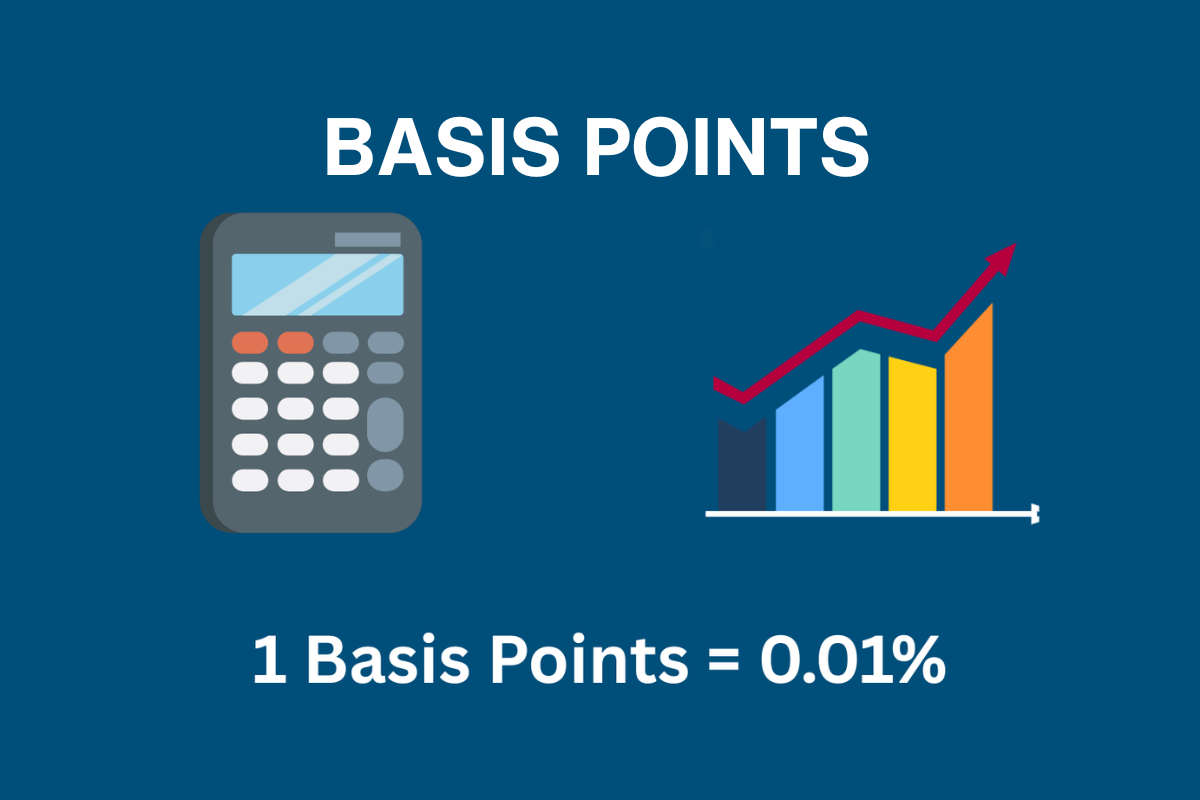
Here’s the fundamental relationship you need to remember: one basis point equals one-hundredth of one percent, or 0.01%.
This means 100 basis points equal exactly 1%. Financial professionals prefer using basis points because they eliminate confusion when discussing percentage changes. Instead of saying “the interest rate increased by 0.25 percentage points,” which could be misunderstood, saying “25 basis points” leaves no room for ambiguity.
How to Calculate and Convert Basis Points
Converting between basis points and percentages is straightforward once you know the formulas.
Converting Basis Points to Percentages

To find the percentage equivalent of any basis point figure, divide by 100.
Formula: Percentage = Basis Points ÷ 100
Example: The RBI announces a 50 basis point cut in the repo rate.
50 ÷ 100 = 0.50%
So a 50 bps reduction means the rate decreased by half a percentage point.
Converting Percentages to Basis Points
When you need to express a percentage change in basis points, multiply by 100.
Formula: Basis Points = Percentage Change × 100
Example: Your home loan interest rate rises from 8.40% to 8.75%.
(8.75% – 8.40%) × 100 = 0.35 × 100 = 35 basis points
The rate increased by 35 bps, which sounds more precise than saying “about a third of a percent.”
Real-World Examples That Affect Your Finances
Understanding basis points becomes much clearer when you see how they impact everyday financial decisions.
Fixed Deposit Rate Changes
Imagine you invested ₹5,00,000 in a fixed deposit offering 7.10% annual interest in early 2025. A few months later, your bank announces that FD rates have increased by 40 basis points due to monetary policy changes.
Your new rate would be 7.50% (7.10% + 0.40%). On your ₹5 lakh investment, this 40 bps increase translates to an additional ₹2,000 in annual interest—a meaningful difference over a multi-year deposit.
Home Loan Interest Rate Adjustments
Let’s say you have a ₹50 lakh home loan at 8.50% interest with 15 years remaining. Your bank notifies you of a 25 basis point reduction in lending rates following an RBI policy announcement.
Your new rate drops to 8.25%. While 25 bps might seem small, over the remaining loan tenure, this could save you tens of thousands of rupees in interest payments.
Tata Motors Earnings
Tata Motors reported earnings higher than expected due to strong sales of the Tata Punch. As a result, the stock price increased by 250 basis points, or 2.5%.