How to Check Taxpayer Type in India 2026
Understanding your taxpayer type is essential for accurate return filing, correct tax planning, and smooth business transactions in India. It affects your tax slab, compliance rules, and the benefits you can claim under the Income Tax Act.
What Is Taxpayer Type in India?
Your taxpayer type is the category under which you are recognized by the Income Tax Department for filing and compliance. It is directly linked to how your income is taxed and what legal responsibilities you have.
In India, the main taxpayer types are:
- Individual
- Hindu Undivided Family (HUF)
- Firm or Partnership
- Company
Each category has its own rules for tax rates, deductions, and liabilities.
How to Check Taxpayer Type Using PAN
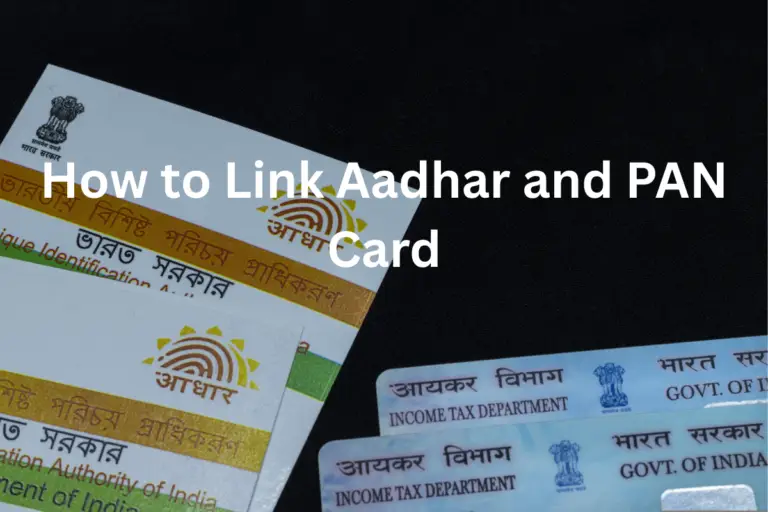
The simplest way to check taxpayer type in India is by looking at the fourth character of your PAN. The PAN structure is designed so that one letter tells the department what kind of taxpayer you are.
Here is the basic mapping:
- P = Individual / Person
- H = Hindu Undivided Family
- F = Firm / Partnership
- C = Company
- A = Association of Persons
- T = Trust
- B = Body of Individuals
- L = Local Authority
- J = Artificial Juridical Person
- G = Government
For example, in PAN number ALQPQ0301M, the fourth character is “P”, which means the taxpayer type is Individual.
Taxpayer Types Explained
Individual Taxpayer
An individual taxpayer is a single person managing personal income and tax obligations. This includes salaried employees, freelancers, small business owners, and investors.
- The fourth character in an individual’s PAN is “P”.
- All assets and income linked to this PAN belong to that person alone.
- The individual is fully responsible for filing returns and maintaining compliance.
Hindu Undivided Family (HUF)
A Hindu Undivided Family is treated as a separate taxable unit from its members. It exists by status under Hindu law, not by contract.
- The fourth character in a HUF PAN is “H”.
- The Karta manages the affairs of the HUF, while other members are coparceners.
- Property and income belong collectively to the family, and membership usually comes by birth, marriage, or adoption.
Firm or Partnership
A firm arises from a partnership agreement between two or more persons under the Indian Partnership Act, 1932.
- The fourth character in a partnership PAN is “F”.
- Partners share profits and losses and have unlimited liability for the firm’s obligations.
- Registration is not compulsory but highly recommended for legal protection and credibility.
Company
A company is incorporated under the Companies Act, 2013 and is a distinct legal entity.
- The fourth character in a company PAN is “C”.
- Directors manage day-to-day operations, while shareholders have limited liability.
- Companies must be registered and are subject to audits and stricter compliance norms.
Why Knowing Your Taxpayer Type Matters
Knowing how to check taxpayer type in India helps you avoid errors and plan better. It is not just a label on your PAN; it shapes your entire tax and legal profile.
Key reasons it matters:
- Compliance requirements: Different categories have different return forms, due dates, and audit rules.
- Business verification: You can verify whether an entity is a firm, company, HUF, or individual before dealing with them.
- Tax planning: Each taxpayer type enjoys different exemptions, deductions, and planning opportunities.
- Legal structure: Your taxpayer type reflects your risk, liability, and regulatory exposure.
Quick 5-Step Checklist to Check Taxpayer Type
Use this quick checklist whenever you need to check taxpayer type in India through PAN:
- Locate your PAN number (physical card or digital copy).
- Count to the fourth character from the left.
- Identify the letter (P, H, F, C, etc.).
- Match it with the taxpayer type list above.
- Use this type while filing returns, verifying entities, or reviewing tax documents.
Frequently Asked Question
How can I check my taxpayer type without a PAN card?
You can verify your taxpayer classification through the Income Tax e-filing portal using your credentials, or request PAN details via the NSDL/UTIITSL websites using your PAN number.
Can a taxpayer type change over time?
Yes, if your business structure changes (e.g., individual to company), you must obtain a new PAN reflecting the updated taxpayer classification. The original PAN cannot be modified.
What happens if I use the wrong taxpayer type while filing returns?
Filing under an incorrect taxpayer category can lead to processing delays, penalties, and compliance issues. Always verify the 4th character of your PAN matches your intended filing category.
Do NRIs have different taxpayer type codes?
No, NRIs use the same PAN structure. Individual NRIs have “P” as the 4th character, just like resident Indians. The taxpayer type depends on legal structure, not residency status.
Is the taxpayer type visible on the PAN card?
Yes, the 4th character of your 10-digit PAN explicitly indicates your taxpayer type (P=Individual, H=HUF, F=Firm, C=Company, etc.).
You can verify your taxpayer classification through the Income Tax e-filing portal using your credentials, or request PAN details via the NSDL/UTIITSL websites using your PAN number.
Yes, if your business structure changes (e.g., individual to company), you must obtain a new PAN reflecting the updated taxpayer classification. The original PAN cannot be modified.
Filing under an incorrect taxpayer category can lead to processing delays, penalties, and compliance issues. Always verify the 4th character of your PAN matches your intended filing category.
No, NRIs use the same PAN structure. Individual NRIs have “P” as the 4th character, just like resident Indians. The taxpayer type depends on legal structure, not residency status.
Yes, the 4th character of your 10-digit PAN explicitly indicates your taxpayer type (P=Individual, H=HUF, F=Firm, C=Company, etc.).