PAN, AADHAAR, TAN CARD Guide: 3 Essential Documents Every Indian Must Know
Imagine you just got your first job.
Your employer asks you to share some important numbers: PAN, Aadhaar, and something new called TAN. You may have heard of PAN and Aadhaar, but TAN sounds confusing.
If this feels overwhelming, you are not alone. Many first-time earners struggle to understand these three tax IDs. This PAN card guide will help you understand what PAN, TAN, and Aadhaar are, why they matter, and how they affect your money in 2026.
Why You Need This PAN Card Guide in 2026
Today, almost every major financial activity in India is linked to PAN, TAN, or Aadhaar. From getting your salary credited to investing or filing your income tax return, these three IDs quietly sit in the background and keep the system working.
Without them, simple tasks like opening a bank account, applying for a loan, or buying property can quickly turn into a frustrating experience. This PAN card guide will walk you through each ID in simple language, so you know exactly what you need and when.
Understanding PAN: Your Essential PAN Card Guide
What Is PAN?
PAN means Permanent Account Number. It is a 10-character unique alphanumeric identifier issued by the Income Tax Department under the Central Board of Direct Taxes (CBDT). It works like a financial identity card for individuals, companies, and other entities.
Once issued, your PAN generally remains the same for life. It is used to record and track all your major financial transactions that may have tax implications.
PAN Structure Explained
Every PAN follows a standard structure. This PAN card guide breaks it down so you can quickly understand what each character means:
- The first five characters are alphabets.
- The next four characters are numbers.
- The last character is an alphabet.
Example: ABCCE1234
Breakdown:
- First three characters (ABC): Alphabetic series from AAA to ZZZ.
- Fourth character (C): Represents the status of the PAN holder, such as P for Individual, C for Company, H for Hindu Undivided Family.
- Fifth character (E): First letter of the PAN holder’s last name or surname in case of individuals.
- Next four characters (1234): Sequential numbers from 0001 to 9999.
- Last character (F): Alphabetic check digit used for verification.
Who Needs PAN?
Most taxpayers in India need PAN. This includes:
- Salaried Individuals
- Freelancers and business owners
- Companies and firms
- Non-resident Indians (NRIs) with income in India
- Investors in stocks, mutual funds, or other financial instruments
- Anyone involved in high-value financial transactions like buying property, vehicles, or large fixed deposits
If you earn taxable income, invest, or run a business, this PAN card guide applies directly to you.
Why Is PAN Important?
Think of PAN as your financial fingerprint. It helps the government:
- Identify taxpayers
- Track financial activities
- Prevent tax evasion
- Ensure proper tax collection
You typically need PAN for:
- Filing income tax returns (ITR)
- Opening bank accounts
- Applying for loans and credit cards
- Making high-value investments or purchase
- Buying or selling property beyond specified limits
Without PAN, you may face penalties or see your transactions rejected or delayed.
How to Get PAN
Applying for a PAN card has become simple and mostly online.
You can apply through authorized portals such as NSDL or UTIITSL. You will need:
- Identity proof (Aadhaar, voter ID, passport, etc.)
- Address proof
- Recent photographs (for individuals)
After submitting the form and documents, it usually takes around 10–15 working days for your PAN to be issued and delivered.
What Is TAN?
TAN stands for Tax Deduction and Collection Account Number. While PAN is for taxpayers, TAN is for those who deduct or collect tax on behalf of the government under the Income Tax Act.
This means TAN is not for everyone. It is meant for employers, businesses, and other entities that handle tax at source.
Who Needs TAN?
You need TAN if you deduct Tax Deducted at Source (TDS) or collect Tax Collected at Source (TCS). Common examples include:
- Employers deducting TDS on salaries
- Businesses deducting TDS on contractor payments
- Entities deducting TDS on rent, commission, professional fees, interest, and more
TAN is mandatory for:
- Filing TDS and TCS returns
- Issuing TDS/TCS certificates
- Depositing tax deducted or collected to the government
If you only earn a salary and do not deduct tax from others, this PAN card guide clarifies that you generally do not need TAN.
TAN Structure in Simple Terms
TAN has 10 characters, similar to PAN, but follows a different pattern:
- First 4 characters are alphabets
- Next 5 characters are digits
- Last character is an alphabet
Example: MUMD12345E
Breakdown:
- First three letters (MUM): Represent the jurisdiction code, such as MUM for Mumbai or DEL for Delhi
- Fourth letter (D): First letter of the name of the deductor (individual or entity)
- Next five digits 12345): System-generated unique numbers
- Last letter (E): Check digit for validation
Why TAN Matters
TAN ensures that the tax deducted from payments such as salary or contractor fees is correctly credited to the government in the name of the right taxpayer.
If you deduct tax but fail to obtain TAN, you can face penalties, compliance issues, and trouble filing TDS returns. For any business owner, this PAN card guide strongly recommends applying for TAN before starting regular TDS deductions.
How to Apply for TAN
You can apply for TAN using Form 49B through authorized online portals. You will need:
- Basic details of the deductor (name, address, category)
- Contact details
- Relevant business or entity information
Once submitted, TAN is usually allotted within 7–10 business days.
Aadhaar: Your Biometric Identity
What Is Aadhaar?
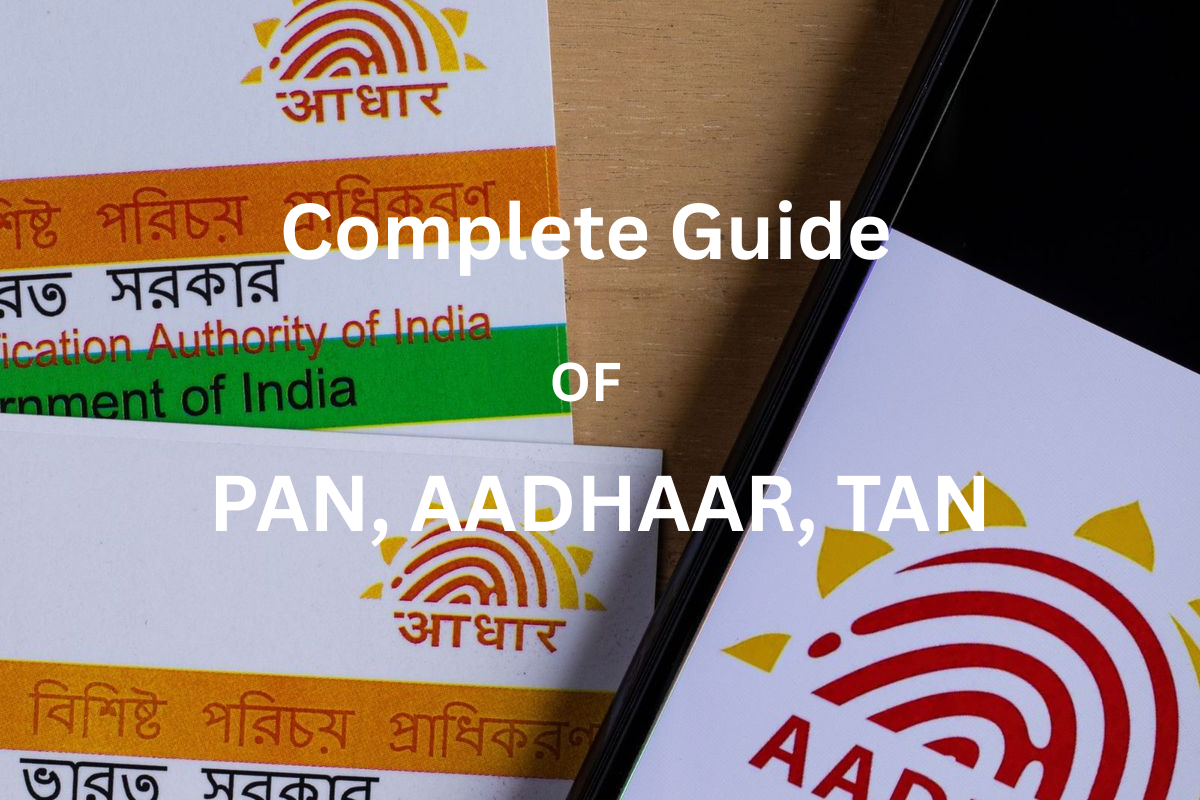
Aadhaar is a 12-digit unique identity number issued by the Unique Identification Authority of India (UIDAI). It is based on:
- Biometric data (fingerprints and iris scans)
- Demographic details (name, address, date of birth, etc.)
Aadhaar is widely accepted for identity verification across government and private services, including banking, telecom, and subsidies.
How Aadhaar Relates to Taxation
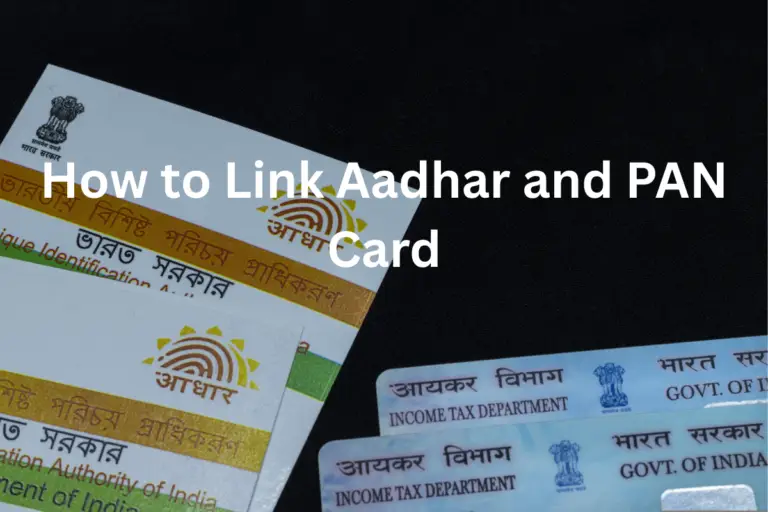
While Aadhaar is primarily an identity document, it now plays a major role in tax compliance. This PAN card guide would be incomplete without talking about the PAN–Aadhaar link.
The government has made linking PAN with Aadhaar compulsory for:
- Filing income tax returns
- Ensuring correct tax records
- Eliminating duplicate or fake PAN cards
- Smooth processing of refunds
If PAN and Aadhaar are not linked, your PAN can become inoperative, and you may face higher TDS or blocked refunds.
Who Needs Aadhaar for Tax Purposes?
Any resident individual who holds a PAN and is required to file an income tax return must link Aadhaar with PAN. This is now a key compliance step in India.
NRIs have different rules, but residents who fall under the PAN and tax filing rules should treat the Aadhaar–PAN link as essential.
Suggested: How to link PAN with AADHAAR, click here
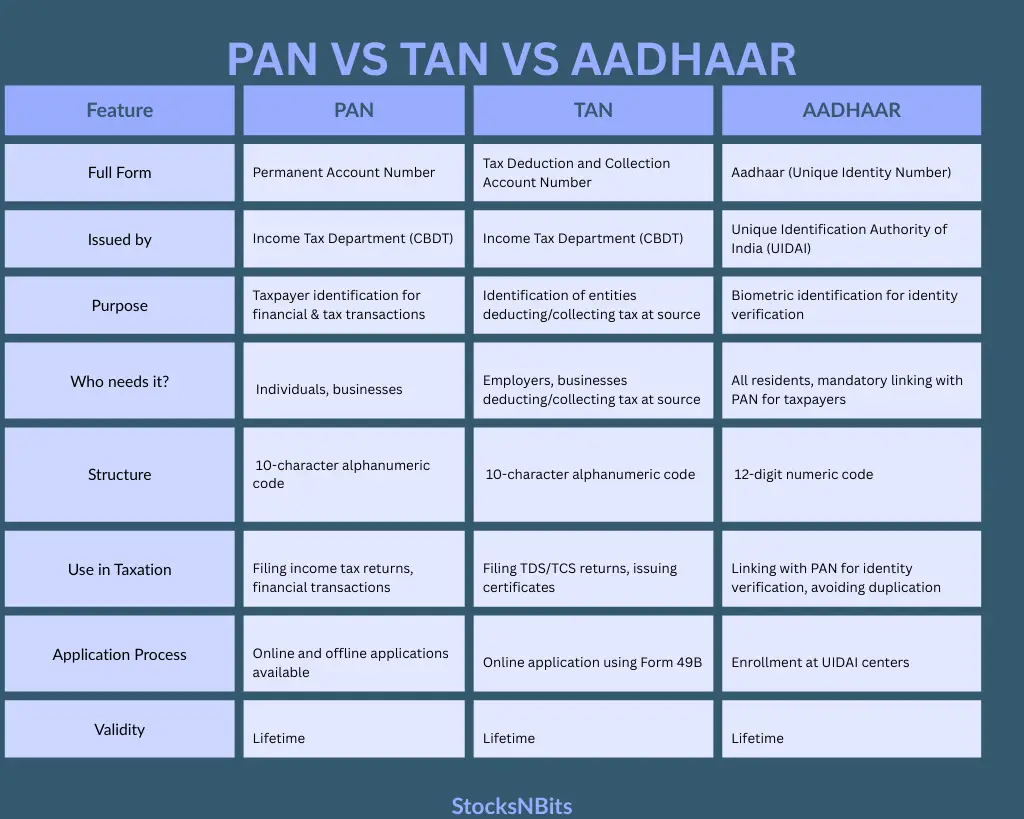
Key Differences Between PAN, TAN, and Aadhaar
A quick way to remember the difference is to look at the main purpose:
- PAN: Identifies taxpayers and tracks financial transactions
- TAN: Identifies deductors and collectors of tax at source
- Aadhaar: Establishes identity using biometrics and is linked to PAN for tax compliance
Each one plays a different role, but together they create the backbone of India’s tax and identity system. This PAN card guide helps you see how they connect without getting lost in jargon.
Practical Scenarios
Individual Filing Income Tax Return
Ravi is a salaried employee. He wants to file his income tax return for the year.
- He must have a valid PAN
- His PAN must be linked to his Aadhaar to file ITR.
- He does not need TAN because he is not deducting tax from anyone else.
Small Business Deducting TDS
Sneha runs a small consultancy firm and hires freelance contractors.
- She needs PAN for her business and tax filings.
- She must obtain TAN because she is deducting TDS from payments made to her contractors.
- She must use TAN while filing TDS returns and issuing TDS certificates
Investor Making Financial Transactions
Arun wants to invest in mutual funds and stocks.
- The platforms ask for PAN for KYC and tax reporting.
- Without PAN, his investments can be rejected or delayed.
- Linking Aadhaar with PAN reduces issues in verification and refund processing.
Frequently Asked Question
Can I apply for PAN without Aadhaar?
Yes, you can apply for PAN using other identity documents. However, for filing income tax returns, PAN must be linked with Aadhaar, so you will eventually need Aadhaar to stay fully compliant.
What happens if I do not link PAN and Aadhaar?
If PAN is not linked with Aadhaar within the prescribed deadlines, your PAN can become inoperative. In that case, you may not be able to file ITR, and tax could be deducted at higher rates on your income.
Do salaried employees need TAN?
No, regular salaried employees do not need TAN. TAN is required only for those who deduct or collect tax at source, such as employers, businesses, or institutions.
How long does it take to get a PAN card?
After submitting a complete application through NSDL or UTIITSL with necessary documents, PAN is usually issued within 10–15 working days.
What is the basic difference between PAN and TAN?
PAN is used by taxpayers to file returns and perform financial transactions. TAN is used by deductors or collectors of tax to deposit and report TDS/TCS to the government.
Is Aadhaar mandatory for NRIs to get PAN?
Generally, NRIs can apply for PAN using their passport and are not required to have Aadhaar, provided they are non-residents under Indian law. Always check the latest rules before applying.
Can a person have more than one PAN?
No. Holding more than one PAN is illegal and can attract penalties. Each individual or entity should have only one PAN for all financial and tax purposes.
Where can I check my PAN application status?
You can track the status of your PAN application on the NSDL or UTIITSL websites using the acknowledgment number provided at the time of application.
Yes, you can apply for PAN using other identity documents. However, for filing income tax returns, PAN must be linked with Aadhaar, so you will eventually need Aadhaar to stay fully compliant.
If PAN is not linked with Aadhaar within the prescribed deadlines, your PAN can become inoperative. In that case, you may not be able to file ITR, and tax could be deducted at higher rates on your income.
No, regular salaried employees do not need TAN. TAN is required only for those who deduct or collect tax at source, such as employers, businesses, or institutions.
After submitting a complete application through NSDL or UTIITSL with necessary documents, PAN is usually issued within 10–15 working days.
PAN is used by taxpayers to file returns and perform financial transactions. TAN is used by deductors or collectors of tax to deposit and report TDS/TCS to the government.
Generally, NRIs can apply for PAN using their passport and are not required to have Aadhaar, provided they are non-residents under Indian law. Always check the latest rules before applying.
No. Holding more than one PAN is illegal and can attract penalties. Each individual or entity should have only one PAN for all financial and tax purposes.
You can track the status of your PAN application on the NSDL or UTIITSL websites using the acknowledgment number provided at the time of application.