5 Key Differences: Direct vs Indirect Taxes in India 2026
India’s tax system operates on three levels. These include Central Government, State Government, and Local Government. The Indian Constitution establishes this structure.
Taxes in India fall into two main categories: direct taxes and indirect taxes. Understanding both direct vs indirect taxes in India helps you manage your finances better. This guide explains how this tax types work and differ.
Understanding Direct Taxes
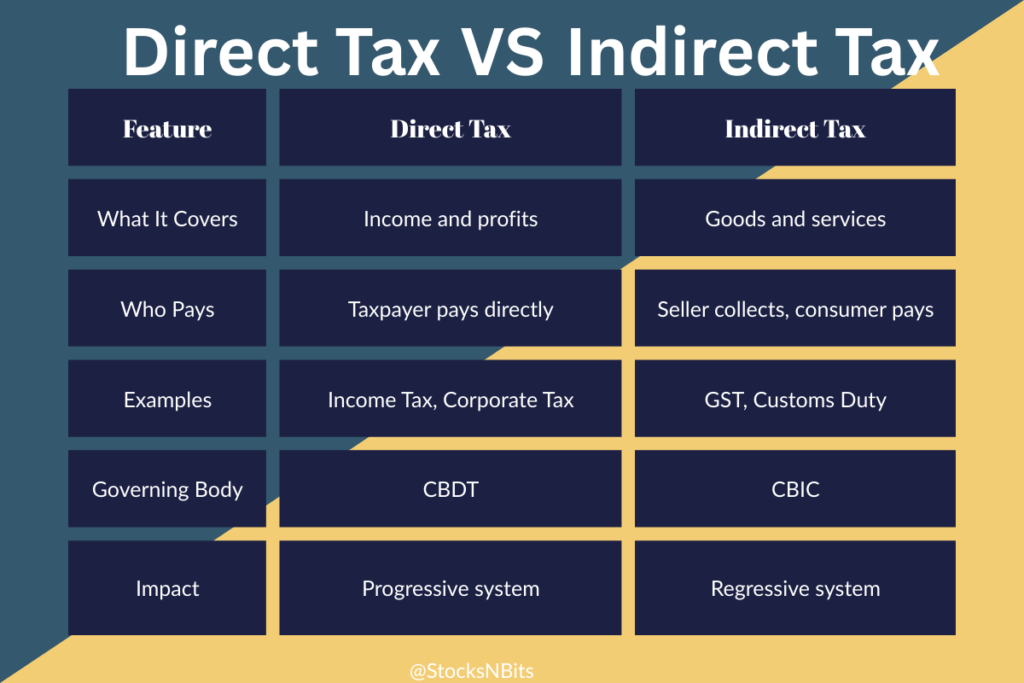
Direct taxes go straight to the government from your earnings. You pay these taxes on income or profits you make. The tax rate increases as your income grows.
Higher earners pay more under this system. This makes direct taxes progressive in nature.
Common Types of Direct Taxes
- Income Tax: Applied to salary and wages
- Corporate Tax: Paid by businesses on profits
- Capital Gains Tax: Charged on investment profits
If you earn a salary, the government collects tax directly from you. Business owners also pay taxes on their profits.
How Direct Taxes Are Collected
The government uses three main methods to collect direct taxes.
Tax Deducted at Source (TDS): Your employer deducts tax before paying your salary. Banks also deduct tax on interest earned.
Advance Tax: You estimate your yearly income and pay taxes in parts. This happens throughout the financial year instead of at the end.
Self-Assessment Tax: After filing your return, you pay any remaining tax. This amount excludes what you’ve already paid through TDS or advance tax.
Understanding Indirect Taxes
Indirect taxes work differently from direct taxes. You pay them when buying goods or services. These taxes are included in the product price.
When you purchase an iPhone, you pay GST. Ordering food from Swiggy or Zomato also includes GST. The seller collects this tax and gives it to the government.
How Indirect Taxes Flow
Businesses collect indirect taxes from customers. They act as intermediaries between you and the government. The final consumer bears the actual tax burden.
Indirect taxes apply equally to everyone. A rich person and a poor person pay the same GST rate. This makes indirect taxes regressive.
5 Major Differences for Direct Tax Vs Indirect Taxes
Which Taxes Matter to You
The Central Government collects most direct taxes. State Governments share indirect tax collection with the Centre. Both levels work together under GST.
Understanding these differences helps you plan better. Direct taxes reduce your take-home income. Indirect taxes increase the cost of things you buy.
Frequently Asked Questions
Can I avoid paying indirect taxes?
No, indirect taxes are included in product prices. You pay them automatically when making purchases.
Are direct taxes better than indirect taxes?
Both serve different purposes. Direct taxes are fairer based on income. Indirect taxes are easier to collect.
How does GST fit into this system?
GST is an indirect tax. It replaced multiple older indirect taxes in 2017.
No, indirect taxes are included in product prices. You pay them automatically when making purchases.
Both serve different purposes. Direct taxes are fairer based on income. Indirect taxes are easier to collect.
GST is an indirect tax. It replaced multiple older indirect taxes in 2017.